I still remember my first bite.
The skin cracked between my teeth with a sound that was almost musical—like breaking through caramelized glass. Then came the explosion of flavor. Garlic. Lemongrass. Star anise. A dozen herbs I couldn’t name, all singing together in perfect harmony. The meat beneath was so tender it practically surrendered to my fork.
I looked at my Cebuano friend, eyes wide, speechless.
She just smiled and nodded. “Now you understand,” she said. “There’s lechon. And then there’s Cebu lechon.”
Not All Lechon Is Created Equal
Let me be clear about something. I’ve had lechon in Manila. I’ve had it in Luzon, in Mindanao, at countless fiestas and birthday parties across the Philippines. All of it was good. Some of it was great.
But Cebu lechon? That’s a different species entirely.
The difference is simple and profound: Cebu lechon doesn’t need sauce. No liver gravy. No vinegar dip. No sweet chili. Nothing. The flavor is built into the pig itself, stuffed inside its belly before it ever touches the fire .
In other parts of the Philippines, lechon is often served with a dipping sauce—sarsa—because the meat itself is relatively plain. Not here. Not in Cebu. Here, the pig is the masterpiece.
The Stuffing That Changes Everything
So what goes inside this magical creature?
The traditional stuffing is a fragrant symphony: lemongrass, garlic, onions, ginger, star anise, bay leaves, salt, pepper, and sometimes coconut milk or vinegar . Some families add secret ingredients passed down through generations. Some swear by a particular ratio. Others refuse to share their recipe at all.
The herbs do more than flavor the meat. They perfume it. They transform it. Every bite carries the memory of that stuffing—earthy, aromatic, slightly citrusy, deeply savory.
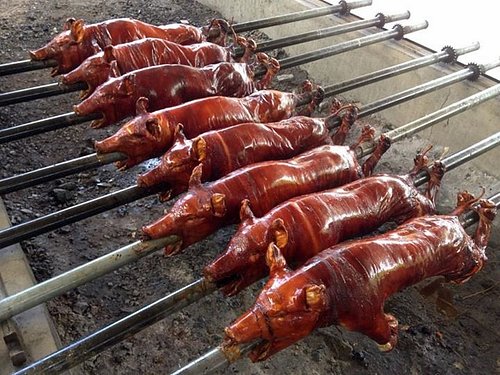
And the skin? That’s where the magic really happens. Roasted over charcoal for hours, brushed with coconut water or oil, it becomes something transcendent: golden, blistered, shatteringly crisp . It crackles when you bite into it. It shatters like glass. It’s so good that people fight over it at parties.
The Ritual of the Spit
Cebu lechon isn’t just food. It’s a ritual. It’s a performance. It’s a labor of love that takes hours—sometimes an entire day.
The pig is cleaned, seasoned, and stuffed. Then it’s skewered on a long bamboo pole and slowly rotated over glowing charcoal. The lechonero—the master roaster—watches it like a hawk, turning it constantly, basting it patiently, adjusting the fire with practiced hands .
This isn’t a job you learn from a YouTube tutorial. This is a craft passed down through families, through generations, through the sweat and patience of people who’ve been doing it their whole lives. The best lechoneros are treated like artists, because that’s exactly what they are.
In Cebu, lechon is more than food. It’s pride. It’s identity. It’s the centerpiece of every celebration that matters—fiestas, weddings, birthdays, homecomings, and even the occasional Tuesday because life is short and lechon is good.
The “Best Lechon in the World” Claim
Here’s where things get interesting.
Anthony Bourdain—yes, that Anthony Bourdain—once declared Cebu lechon the “best pig ever” . He wasn’t exaggerating. He was stating a fact that millions of Filipinos already knew.
The late chef and travel documentarian famously said that Cebu lechon was worth flying halfway around the world for. He praised its crispy skin, its flavorful meat, and the way it needed no accompaniment. For many Cebuanos, that moment was vindication. The world finally understood what they’d known all along.
But here’s the thing: Cebuanos don’t need Bourdain’s approval. They’ve been eating the best lechon in the Philippines for centuries. The world just caught up.
Where to Find the Best
If you ever find yourself in Cebu, here’s the shortlist that locals will argue about forever:
CnT Lechon – The most famous name in Cebu lechon. Multiple branches across the city. Consistent, flavorful, and always packed. A safe bet for first-timers .
Zubuchon – Founded by food writer Joel Binamira, this is the gourmet version. Anthony Bourdain ate here. The skin is legendary. The meat is juicy. The experience is worth the slightly higher price .
Rico’s Lechon – A Cebuano institution. Known for its tender meat and perfectly crispy skin. A favorite for family celebrations .
Talamban Lechon – For those in the know, this neighborhood spot serves some of the most authentic, no-frills lechon in the city.
But honestly? Ask any Cebuano and they’ll tell you the best lechon is the one their lola makes. Or their neighbor. Or that guy down the street who’s been roasting pigs for forty years. Every family has their spot. Every spot has its loyalists.
The Heart of the Feast
What makes Cebu lechon special isn’t just the taste. It’s what it represents.
In Cebu, lechon is the ultimate symbol of generosity. When you serve lechon at a party, you’re telling your guests: You are worth celebrating. You are worth the effort. You are worth the best.
It’s the dish that brings people together. The reason cousins who haven’t seen each other in years suddenly show up. The excuse to gather, to laugh, to eat until you can’t move.
I’ve seen grandmothers sneak the crispy skin to their grandchildren. I’ve seen grown men argue over who gets the last piece. I’ve seen strangers become friends over a shared plate of lechon.
That’s the power of this dish. It’s not just food. It’s memory. It’s love. It’s home.
A Warning to the Uninitiated
One last thing.
Once you’ve had Cebu lechon, you can’t go back. You’ll compare every other lechon to it. You’ll notice the missing lemongrass. You’ll lament the soggy skin. You’ll wonder why anyone bothers with sauce.
You’ll become one of those people who says, “Well, it’s good, but it’s not Cebu good.”
And you’ll mean it.
So consider yourself warned. Cebu lechon will ruin you for all other pork. But honestly? That’s a sacrifice worth making.
Pit Señor, and pass the lechon. 🐷🔥