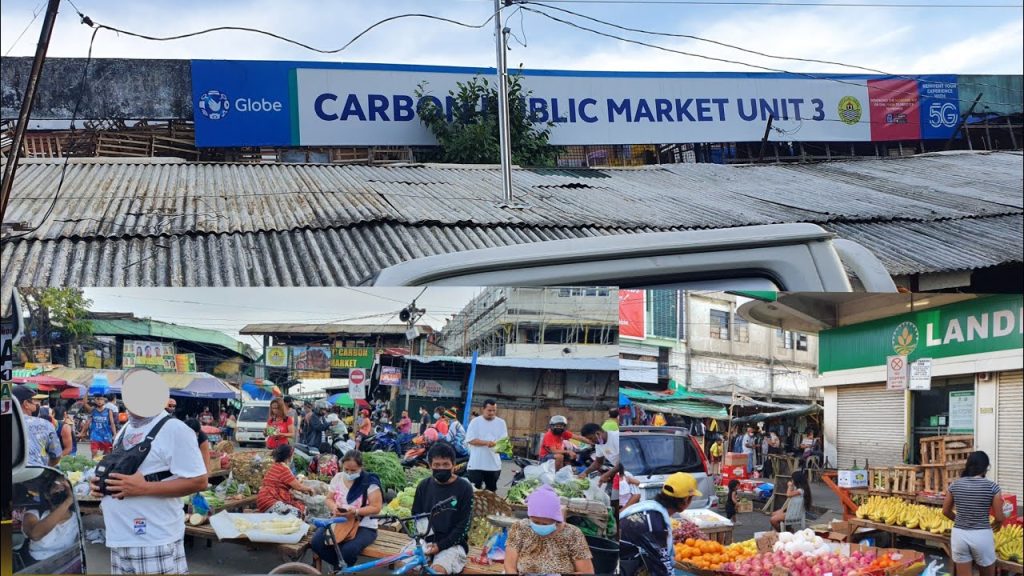
“Palit ta sa Carbon.”
Those four words. That’s all my lola had to say, and suddenly, my 10-year-old self was bouncing off the walls. Not because I loved vegetables. Not because I enjoyed crowded spaces. But because Carbon Market meant one thing: adventure.
The smell of dried fish and ripe mangoes. The symphony of vendors shouting over each other. The labyrinth of stalls where you could find literally anything—from a single garlic clove to a second-hand chainsaw.
I didn’t know it then, but Carbon was teaching me something. It was teaching me how Cebuanos live, eat, bargain, and survive.
Years later, I still go back. And every time, it feels like coming home to a noisy, beautiful, chaotic family reunion.
What Is Carbon Market, Anyway?
If you’ve never been, let me paint you a picture.
Carbon Public Market sits right in the heart of Cebu City. It’s old—like, Spanish-colonial-old. It’s massive. It’s impossible to navigate without getting lost at least twice. And it’s probably the most honest place in the entire city.
Because here, there’s no pretense.
No air conditioning. No polished floors. No curated Instagram aesthetics. Just raw, unfiltered, everyday Cebu.
You want fresh fish? They have fish that were swimming hours ago. You want fruits? They have mangoes so sweet they’ll ruin all other mangoes for you. You want cheap clothes, kitchenware, flowers, meat, rice, coffee, herbs, and that one specific brand of fish sauce your mom swears by? Carbon has all of it.
And it has something else too—something invisible but palpable. It has story. Every corner, every vendor, every worn-out wooden stall has decades of history soaked into it.
The Sights and Sounds (Your Senses Will Thank You)
Let me walk you through it—the full sensory experience.
Sight: A kaleidoscope of colors. Green vegetables piled high. Red and yellow bell peppers gleaming. Purple eggplants. Orange carrots. The deep green of malunggay leaves. And the fish section? Silver, blue, and gray scales shimmering under fluorescent lights like scattered coins.
Sound: The cacophony. Vendors shouting, “Barato! Barato! Palit na!” (Cheap! Cheap! Buy now!) The squawk of live chickens. The splash of water on fish. The thwack of a butcher’s knife on meat. The hum of hundreds of conversations in Bisaya, Tagalog, and broken English. It’s not noise. It’s music. The chaotic, glorious music of commerce.
Smell: This one will hit you. The salty, briny smell of the fish section. The earthy, damp smell of vegetables fresh from the highlands. The sweet, intoxicating smell of mangoes and bananas. The smoky smell of grilled meat from vendors selling tuslob-tuslob or puso (hanging rice). It’s overwhelming. It’s perfect.
Touch: The slippery wetness of the fish section floor. The rough texture of burlap sacks filled with rice. The smooth, cool skin of a freshly picked cucumber. The sticky sweetness of overripe mangoes. You leave Carbon feeling like you’ve been physically immersed in it.
Taste: This one you have to earn. Buy fresh seafood, cook it at home, and taste the difference. Buy danggit (dried fish) and fry it crispy. Buy ripe mangoes and eat them with bagoong (shrimp paste). That taste is Carbon’s final gift.
The Vendors (The Real Heroes of Carbon)
Behind every stall is a person with a story.
There’s Aling Nena, who’s been selling tomatoes in the same spot for 30 years. She wakes up at 3 AM to go to the wholesale market. She sorts her tomatoes by hand. She knows exactly which ones are sweet and which ones are best for sarsa. She remembers my lola. She remembers me. She always gives me extra, even when I say no.
There’s Kuya Ricky, the fishmonger. His hands are permanently scarred from years of handling knives and fish bones. He can look at a fish and tell you exactly how fresh it is—just by its eyes. He’ll gut it, scale it, and slice it while you wait. No fuss. No gloves. Just raw skill.
There’s Manang Lorna, who sells flowers at the entrance. She arranges them in bunches with an artist’s eye. Her roses are cheaper than any flower shop in the mall. And she always says, “Para sa imong love, anak?” (For your love, child?) even if I’m buying for myself.
These vendors aren’t just sellers. They’re guardians of tradition. They’ve watched Cebu grow, change, modernize. And they’re still there, doing what they’ve always done—feeding the city.
The Art of Tawad (How to Haggle Without Offending Anyone)
Here’s the thing about Carbon: nobody pays the first price.
Tawad (haggling) is not just accepted—it’s expected. It’s a dance. A game. A conversation.
You ask, “Pila ni?” (How much is this?)
The vendor says, “Singkwenta.” (Fifty.)
You gasp dramatically. “Mahala gud! Katloan na lang.” (So expensive! Thirty na lang.)
They shake their head. “Dili, anak. Kwarenta na lang, last price.” (No, child. Forty, last price.)
You hesitate. They smile. You give in. You both win.
But here’s the unwritten rule: Don’t haggle on tiny amounts. If something costs 10 pesos, just pay it. The vendor needs it more than you do. Haggle on bigger items—meat, seafood, large bundles of vegetables. But on small stuff? Just be kind.
And always, always say “Salamat” after you buy. With eye contact. With a smile. That’s the Carbon way.
The Hidden Gems (What Most Tourists Miss)
Tourists go to Carbon. They take photos. They buy souvenirs. They leave.
But they miss the real treasures.
The dried fish section. Not the fancy packaged ones. The ones wrapped in newspaper, smelling like the ocean and the sun. That’s where the real flavor is.
The herbal medicine stalls. Tucked away in a corner, you’ll find vendors selling tawas (alum), bawang (garlic), luya (ginger), and bundles of medicinal leaves. Your lola’s remedies? They come from here.
The second-hand clothes. Some vendors sell ukay-ukay—used clothes from abroad. You can find vintage Levi’s, retro jackets, and designer pieces for 50 pesos. You just have to dig.
The corner eateries. Eat at the small karinderyas inside Carbon. The food is simple—puso, lechon manok, sutukil (sugba, tuwa, kilaw). But it’s cooked by people who’ve been doing it for decades. It’s real. It’s filling. It’s unforgettable.
The Struggle Is Real (Let’s Be Honest)
I love Carbon. But I’m not going to romanticize it completely.
Because here’s the truth: Carbon is crowded. It’s hot. It’s noisy. The floors are wet. The smell can be too much. You might step in something questionable. You might get lost. You might argue with a vendor. You might feel overwhelmed.
And that’s okay.
Because that’s also Carbon. It’s not a theme park. It’s a working market. People come here to feed their families. People work here from 3 AM to 6 PM, rain or shine. It’s real life—messy, unglamorous, and beautiful in its chaos.
If you want a sanitized experience, go to the mall. But if you want to see Cebu—the real Cebu—you go to Carbon.
What I Always Buy (My Personal Carbon Ritual)
Every time I go home, I make my Carbon pilgrimage. And I always buy the same things:
- Danggit. Crispy, salty dried fish. Perfect with rice and vinegar.
- Mangoes. Cebu mangoes. The sweetest in the world. I will fight anyone who disagrees.
- Tuyo. For my sister who lives abroad and cries over it.
- A bunch of malunggay. My mom freezes it and uses it for soup.
- Flowers. For no reason. Just because they’re cheap and they make me happy.
- Puso. Hanging rice, wrapped in coconut leaves. I eat it with whatever meat I find.
It’s my ritual. It’s my way of taking Carbon with me, even when I leave.
The Changing Carbon (What the Future Holds)
There’s talk of renovating Carbon. Modernizing it. Making it more “tourist-friendly.”
Part of me understands. Markets need to evolve. Sanitation is important. Infrastructure matters.
But part of me is scared.
Because Carbon isn’t just a market. It’s memory. It’s history. It’s the place where my lola taught me how to choose the ripest mangoes. It’s where I learned to say “Pila” and “Salamat” and “Usa ka kilo” (One kilo). It’s where I felt, for the first time, what it meant to be Cebuano.
If they clean it up too much, if they make it too polished, will it still feel the same? Will the vendors still call me “anak”? Will the smell of dried fish and ripe mangoes still hit me like a wave of nostalgia?
I don’t know.
But I hope, whatever happens, Carbon’s soul stays intact. Because that soul—chaotic, loud, generous, and unpretentious—is the soul of Cebu itself.
A Letter to First-Timers
Dear first-timer,
You’re probably nervous. That’s okay. Carbon is overwhelming.
But here’s my advice:
Go early. 6 AM, before the heat gets unbearable. Wear comfy shoes. Bring cash—small bills and coins. Keep your bag close. Ask the vendors questions. Smile. Be patient. Get lost on purpose.
And when you leave, buy one extra mango. Eat it on the way home. Let the juice drip down your chin. Because that moment—that sticky, sweet, imperfect moment—is what Carbon is all about.
PS: If you see Aling Nena, tell her I said “Kumusta.” She’ll know. She always knows.
PPS: Try the tuslob-tuslob—but only if you’re brave. And bring extra rice. You’ll need it.
Want me to make it shorter, add more specific stalls, or write a version for tourists vs. locals? Just tell me.